Fascinating read about organic eggs, chickens who lay them and the USDA!
Wednesday, October 6, 2010
Are Organic Eggs Really Healthier and Tastier and from Happier Chickens than Conventional Eggs? | | AlterNet
Are Organic Eggs Really Healthier and Tastier and from Happier Chickens than Conventional Eggs? | | AlterNet

Thursday, September 2, 2010
Pease Pudding Please
Who said that the traditional cuisine of Great Britain lacks tasty or vegetarian dishes? This Split Pea (Pease) Pudding recipe from Rose Elliot’s Vegetarian Dishes from Around the World is both yummy and veggie. In fact, it would be a great dish to bring to a pot luck gathering, make as a main dish to serve with roasted root veggies and sauteed brussel sprouts, or to use as a filling in a crepe.
Ingredients:
1 large onion, diced
1 cup of dried yellow split peas, rinsed (soaking for several hours or overnight is optional)
4 tablespoons butter or olive oil
salt and pepper
2oz frozen spinach, diced (optional)
dry thyme or dill
Directions:
In a saucepan with a lid cook the yellow split peas until soft but not mushy. This step may take 30-60 minutes.
While the split peas are cooking, on medium heat saute onion until golden and soft in butter or olive oil.
When the onions are golden, add frozen spinach, sea salt, ground black pepper and thyme. Mix well.
When the split peas are finished cooking, drain and add to the onions. Mix well and enjoy hot or at room temperature.
Ingredients:
1 large onion, diced
1 cup of dried yellow split peas, rinsed (soaking for several hours or overnight is optional)
4 tablespoons butter or olive oil
salt and pepper
2oz frozen spinach, diced (optional)
dry thyme or dill
Directions:
In a saucepan with a lid cook the yellow split peas until soft but not mushy. This step may take 30-60 minutes.
While the split peas are cooking, on medium heat saute onion until golden and soft in butter or olive oil.
When the onions are golden, add frozen spinach, sea salt, ground black pepper and thyme. Mix well.
When the split peas are finished cooking, drain and add to the onions. Mix well and enjoy hot or at room temperature.
Wednesday, September 1, 2010
Simple and Amazing Fig Jam
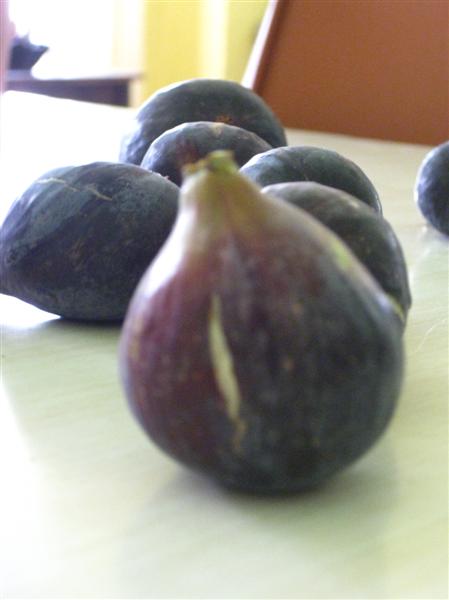
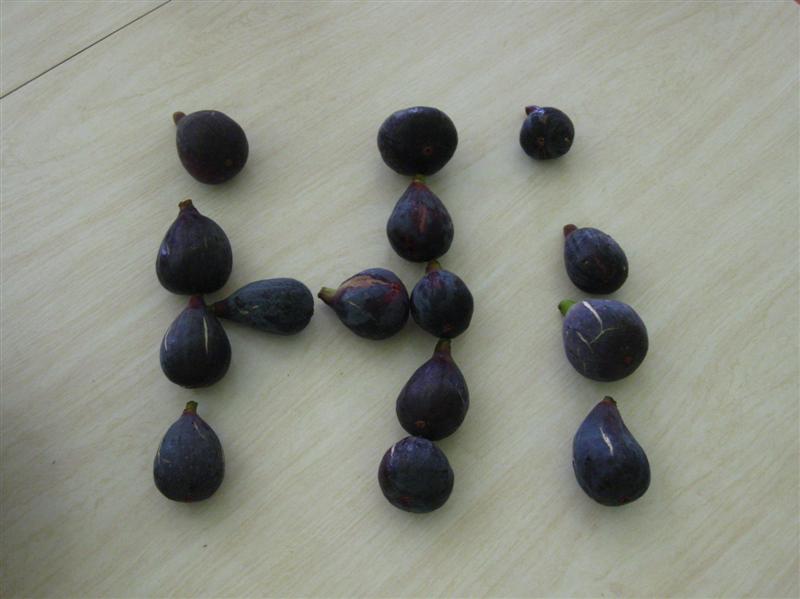
I have a very prolific fig tree and, during this time of the year, can not keep up with the daily fig production. In the Roth household, we eat figs fresh with goat cheese, freeze them to use in smoothies throughout the rest of the year, dry in the dehydrator, and give away to family, neighbors, coworkers and friends. Despite all these efforts, there are still a ton of figs on the tree. So I am making fig jam that pairs nicely with plain greek yogurt, spread over french baguette or the russian way with my morning tea:)
Ideally I would love to find a way to preserve figs without using sugar. But my freezer is at capacity. While comparing recipes, I found that this particular version uses the least amount amount of sugar. It would make my home grown figs unhappy to share a jar with Splenda or gelatin:)
Ingredients:
3lbs of ripe washed figs, stems removed, and cut in halves or quarters
2 cups of sugar
juice and grated zest of 1 large lemon
3 teaspoons of vanilla extract
Directions:
In a large stainless steel pot, combine all four ingredients.
Cover and simmer over low heat for 1 hour stirring occasionally. Consider using a kitchen timer to avoid scorching the bottom of the pan.
Remove cover, turn the heat to medium high and continue simmering while stirring constantly until the jam thickens.
Let cool and keep refrigerated in tightly covered glass jars.
Enjoy!

Tuesday, August 17, 2010
http://yourdailythread.com/2010/08/17/natural-solutions-for-people-and-planet/
http://yourdailythread.com/2010/08/17/natural-solutions-for-people-and-planet/

Connect to nature, and to your health!
This is the second in a series by L.A. Naturopathic Doctor, Maya Roth, who shares with YDT how our own well-being and environmental health are connected–and what we can do to act on behalf of both.
Part Two: CONNECTING TO THE EARTH
Creating positive changes in your lifestyle will affect your health and the health of the environment. For example, we enhance our health by connecting with nature and reducing our participation in activities like watching TV and using the computer that put a strain on the planet’s energy.
Here are some tips to boost your well-being as you conserve resources while reconnecting to the earth:
Fitness
Implement an outdoor fitness routine 30-60 minutes most days like walking, hiking or bicycling. Exercise has been shown to improve brain function, reduce heart disease risk and high blood pressure, reduce stress, improve sleep, enhance physical appearance, build self-esteem and increase energy.
Vitamin G
Spend at least 20 minutes each day in green environments—gardening, bird-watching, or simply strolling through neighborhoods with abundant green space. Looking out on and being in green elements of the landscape around us affects health and well-being so much that scientists have dubbed it “vitamin G.” Vitamin G is associated with stress relief, improved attention, better self-perceived health and lower mortality risk.
Grounding
Strengthen your body’s connection to the earth by walking barefoot on the beach, lying or sitting on the ground, playing barefoot or camping. Grounding, the act of touching the earth’s negatively-charged surface to restore the body’s electrical balance, has been shown to fight inflammation and free-radical stress, which are at the root of diabetes, heart and degenerative joint disease. Daily grounding improves sleep and energy, speeds healing, and helps to manage stress.
Bio: Maya Roth, ND is a licensed Naturopathic Doctor. She practices preventative medicine with emphasis on risk modification, lifestyle optimization and hormone balance. She is in practice at the Chiropractic Center of Los Angeles and specializes in natural family medicine, as well as subspecialties of women’s health, children’s health and environmental medicine. Dr. Roth encourages her patients to take responsibility for their own health and for the environment. She is the creator of Naturopathic Insights. Contact: Tel: (323) 935-9777 begin_of_the_skype_highlighting (323) 935-9777 end_of_the_skype_highlighting; www.DrMayaRoth.com.
Images via Sydigill @ flickr
Friday, July 23, 2010
Safe and Eco-friendly Cookware
While observing the weekly family dinner prep and execution in my mother in law’s kitchen, I learned that in order to make the perfect meal, I not only need perfect (read local, seasonal, better than USDA organic) ingredients I also need the right equipment.
Since moving to LA, my kitchen armamentarium has definitely expanded - I am a proud owner of swiss peelers and serrated knives. No more peeling potatoes with a knife a la Minsk for me or slip-sliding tomatoes a la Trumbull on the cutting board. The right tools make vegetable prep easy peasy!
But the category of tools I really want to talk about is cookware. While most cooks enjoy working with cast iron and enameled (Creuset type) cast iron pots and pans, I refuse to buy cookware that I can’t easily lift from the cupboard with one hand. Cast iron is great for many reasons - it heats and cooks beautifully, it doesn’t leach toxic chemicals, it’s time tested, it is stove top and oven safe, it can even help your iron deficiency anemia. But in my kitchen cast iron doesn’t pass the “can I lift this empty pot or pan with one hand” test.
Let’s talk about cast iron alternatives! You already know that stainless steel is a safe cookware choice. That leaves three lesser known but adored by me cookware alternatives: stone, ceramic and clay.( I know that none of you would consider baking with toxic teflon, acidifying aluminum or non-biodegradable silicone. ) Since I am still on the lookout for the perfect stone pot, I will discuss my favorite clay and ceramic cookware.
 La Chamba
I love Columbian clay La Chamba brand cookware. These traditional casseroles, pots and pans are hand made, light to lift and easy to clean, can be used on the stove top or in the oven, do not leach toxic chemicals, and distribute heat so well that soups and stews simply don’t taste as good when cooked sans clay pots.
Natural Elements
I am also enamored with Natural Elements ceramic muffin pans. Unlike their non-stick or aluminum counterparts, ceramic cupcake pans do not leach toxic chemicals and are easier to clean than stainless steel. I use them for bakingand for freezing individualized portions of risotto or polenta.
Le Flame
Recently I came across Danish Le Flame brand ceramics. These pots are super light and durable, chip and crack resistant, can be used on the stove top, in the oven or in the broiler, do not react with food and do not leach chemicals into food.
What are your go to eco-friendly and safe cookware choices?
Stay tune for next week’s review of my new ice cube trays!
Since moving to LA, my kitchen armamentarium has definitely expanded - I am a proud owner of swiss peelers and serrated knives. No more peeling potatoes with a knife a la Minsk for me or slip-sliding tomatoes a la Trumbull on the cutting board. The right tools make vegetable prep easy peasy!
But the category of tools I really want to talk about is cookware. While most cooks enjoy working with cast iron and enameled (Creuset type) cast iron pots and pans, I refuse to buy cookware that I can’t easily lift from the cupboard with one hand. Cast iron is great for many reasons - it heats and cooks beautifully, it doesn’t leach toxic chemicals, it’s time tested, it is stove top and oven safe, it can even help your iron deficiency anemia. But in my kitchen cast iron doesn’t pass the “can I lift this empty pot or pan with one hand” test.
Let’s talk about cast iron alternatives! You already know that stainless steel is a safe cookware choice. That leaves three lesser known but adored by me cookware alternatives: stone, ceramic and clay.( I know that none of you would consider baking with toxic teflon, acidifying aluminum or non-biodegradable silicone. ) Since I am still on the lookout for the perfect stone pot, I will discuss my favorite clay and ceramic cookware.
La ChambaI love Columbian clay La Chamba brand cookware. These traditional casseroles, pots and pans are hand made, light to lift and easy to clean, can be used on the stove top or in the oven, do not leach toxic chemicals, and distribute heat so well that soups and stews simply don’t taste as good when cooked sans clay pots.
Natural Elements
I am also enamored with Natural Elements ceramic muffin pans. Unlike their non-stick or aluminum counterparts, ceramic cupcake pans do not leach toxic chemicals and are easier to clean than stainless steel. I use them for bakingand for freezing individualized portions of risotto or polenta.
Le Flame
Recently I came across Danish Le Flame brand ceramics. These pots are super light and durable, chip and crack resistant, can be used on the stove top, in the oven or in the broiler, do not react with food and do not leach chemicals into food.
What are your go to eco-friendly and safe cookware choices?
Stay tune for next week’s review of my new ice cube trays!
Wednesday, July 21, 2010
The Story of Cosmetics
The Story of Cosmetics
Annie Leonard of the Story of Stuff: How Our Obsession with Stuff is Trashing the Planet, Our Communities and Our Health has made a new video called the Story of Cosmetics. This is a must watch for everyone!
Annie Leonard of the Story of Stuff: How Our Obsession with Stuff is Trashing the Planet, Our Communities and Our Health has made a new video called the Story of Cosmetics. This is a must watch for everyone!
Tuesday, July 20, 2010
http://yourdailythread.com/2010/07/13/food-solutions-for-people-planet/
http://yourdailythread.com/2010/07/13/food-solutions-for-people-planet/
This is the first in a series by L.A. Naturopathic Doctor, Maya Roth, who shares with YDT how our own well-being and environmental health are connected–and what we can do to act on behalf of both.
Part One: FOOD
Frequently, the chemicals manufactured to ease our lives and increase our convenience actually harm our health and the health of the planet. But in our daily consumer decisions we can influence how many man-made toxins enter the environment and make their way into our bodies at the same time via our air, water and food.

As a Naturopathic Doctor, I teach my patients that by making good eating decisions to safeguard the planet, we as its inhabitants are rewarded with more vibrant health.
Here are some examples of choices we can make where meals are concerned:
Begin on the periphery
Select foods found on the periphery of the supermarket including produce, dairy, poultry, meat and fish. Avoid shopping the inner aisles that contain processed products and artificial ingredients. Not sure? Ask yourself, “Could I buy this product 100 years ago?” If not, then the product in question is not real food. (By shopping at your farmers’ market it’s even easier to guarantee you’re buying honest to goodness edibles.)
Zoom in on the source
Your kitchen is the source of most chemicals in your household. A water filter for the kitchen sink and a reusable stainless steel water bottle will help avoid exposure to toxic chemicals that leach from plastic and polycarbonate water bottles. Also, use glass, cast iron, ceramic and stainless steel cookware and storage containers in lieu of plastic, aluminum and nonstick-coated products. Replace your traditional toxic household dishwashing, cleaning, and laundry products with natural or homemade alternatives.

Focus on purity
Consume fruits and vegetables grown without toxic pesticides. Research shows that people who consume the “dirty dozen,” the 12 most contaminated fruits and vegetables, on average, eat 10 types of pesticides per day! Replace large and farmedfish that are high in mercury and other contaminants with small, wild alternatives. For example, consider substituting traditional tuna with canned wild salmon which has undetectable levels of mercury.
To learn more about naturopathic medicine for personal and planetary health and Dr. Roth, visit www.DrMayaRoth.com.
Bio: Maya Roth, ND is a licensed Naturopathic Doctor. Dr. Roth practices preventative medicine with emphasis on risk modification, lifestyle optimization and hormone balance. She is in practice at the Chiropractic Center of Los Angeles and specializes in natural family medicine, as well as subspecialties of women’s health, children’s health and environmental medicine. Dr. Roth encourages her patients to take responsibility for their own health and for the environment. She is the creator ofNaturopathic Insights. Contact: Tel: (323) 935-9777;http://www.DrMayaRoth.com.
Images via Dr. Maya Roth, RGBclicks @ Flickr and The White Mole @ Flickr
Subscribe to:
Posts (Atom)